Acne is frustrating enough on its own. The scars, dark marks, and uneven texture it leaves behind often feel harder to fix than the breakouts themselves. That’s why many people eventually look past cleansers and spot treatments and start researching stronger options, such as a TCA chemical peel for acne.
If you’re considering a TCA peel and want honest expectations, this guide is for you. We’ll walk through how it works, what the experience is really like, how healing unfolds, and who this treatment actually makes sense for.
What Is a TCA Chemical Peel?
TCA stands for trichloroacetic acid. In dermatology and aesthetic medicine, it is used as a medium-to-deep chemical peel. TCA Chemical Peel helps to resurface damaged skin and encourages regeneration below the surface.
Unlike light peels that only exfoliate the top layer, a TCA peel penetrates deeper. It creates a controlled injury in the skin. This controlled response tells the body to make new collagen. It also speeds up cell turnover and replaces damaged tissue with healthier skin.
When applied correctly, TCA peels can improve acne, post-acne marks, and scarring in ways that topical products simply can’t.
How a TCA Peel Helps Acne-Prone Skin
A TCA chemical peel works on acne from several angles at once.
First, it removes compacted dead skin cells that clog pores and trap bacteria. As that buildup clears, congestion and breakouts often reduce.
Second, it improves inflammation patterns in the skin. During the healing phase, redness settles, and the skin barrier begins to function more normally.
Third, and most importantly for scarring, it stimulates collagen production. This helps soften ice-pick scars, boxcar scars, and uneven texture left behind by years of acne.
The result is not just fewer breakouts, but skin that looks smoother and more even over time.
What Types of Acne Respond Best to TCA Peels?
TCA peels are commonly used for post-inflammatory hyperpigmentation, lingering acne marks, and textural scarring. You can also use them cautiously on acne-prone skin once active inflammation is controlled.
For severe cystic or hormonal acne, a TCA peel is not a standalone cure. In those cases, it’s usually part of a broader treatment plan rather than the first step.
Understanding TCA Peel Strengths
TCA peels come in different concentrations, and each one reaches a different depth in the skin. Lower strengths work more superficially, while higher concentrations create deeper resurfacing.
For acne scarring and stubborn pigmentation, 35% TCA is often used under strict application rules. Because this strength penetrates deeper, following a structured application and recovery protocol is critical.
This is why reviewing the Application Protocol before treatment matters just as much as the peel itself.
Can You Use a TCA Chemical Peel for Acne at Home?
Yes, but only when the peel is specifically engineered for safe at-home use.
Modern at-home TCA systems differ from traditional clinic formulas. They use self-neutralizing technology. This limits over-penetration and helps keep the peel within the skin’s safe range.
Even with these safeguards, preparation and aftercare are not optional. Understanding timing, layering, and recovery is what separates good results from unnecessary complications.
For first-time users, starting with a structured home-use kit is essential.
What the Treatment Feels Like
The application process is controlled and methodical.
After cleansing and degreasing the skin, the peel is applied in thin layers. Most people experience tingling, warmth, or a stinging sensation. This feeling peaks quickly and then settles.
You may notice frosting, which appears as white or cloudy patches on the skin. This indicates protein coagulation and is a normal part of the process.
With self-neutralizing formulas, the peel completes its action without requiring a separate neutralizer.
The Healing Timeline: What to Expect
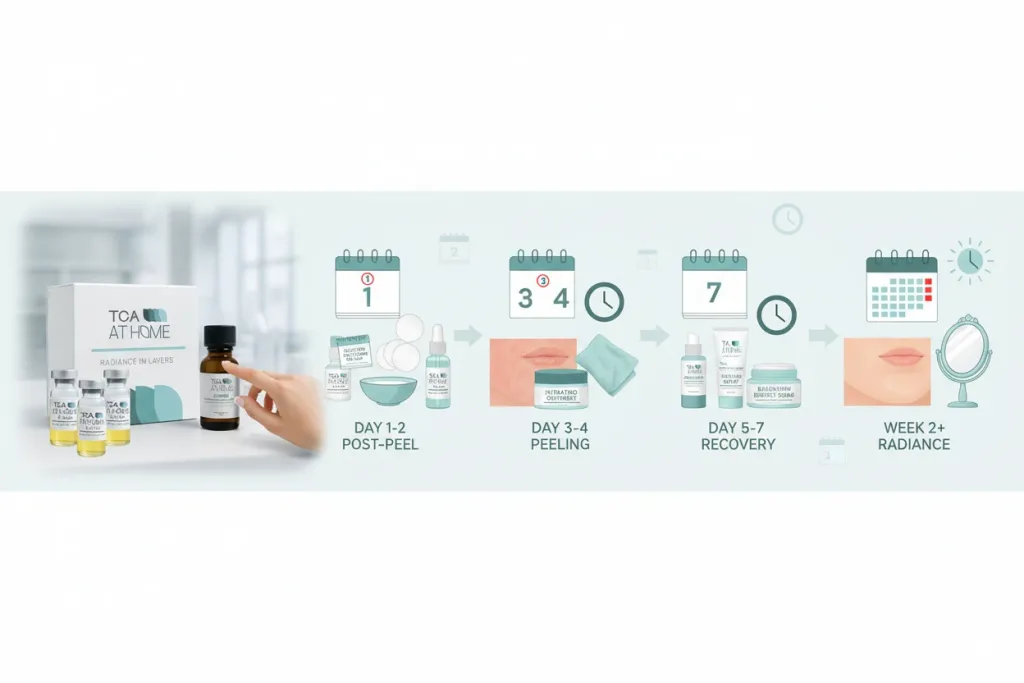
Healing is where patience matters most.
In the first couple of days, the skin often feels tight and may darken slightly. Peeling typically begins around day three. Skin sheds gradually over several days. This phase should never be rushed or picked at.
By the second week, fresh skin is visible. Redness continues to fade, and the texture feels smoother. Over the following weeks, collagen remodeling continues beneath the surface, improving acne marks and scarring.
Strict sun protection and gentle skincare during this period play a major role in final results.
Realistic Results From a TCA Peel for Acne
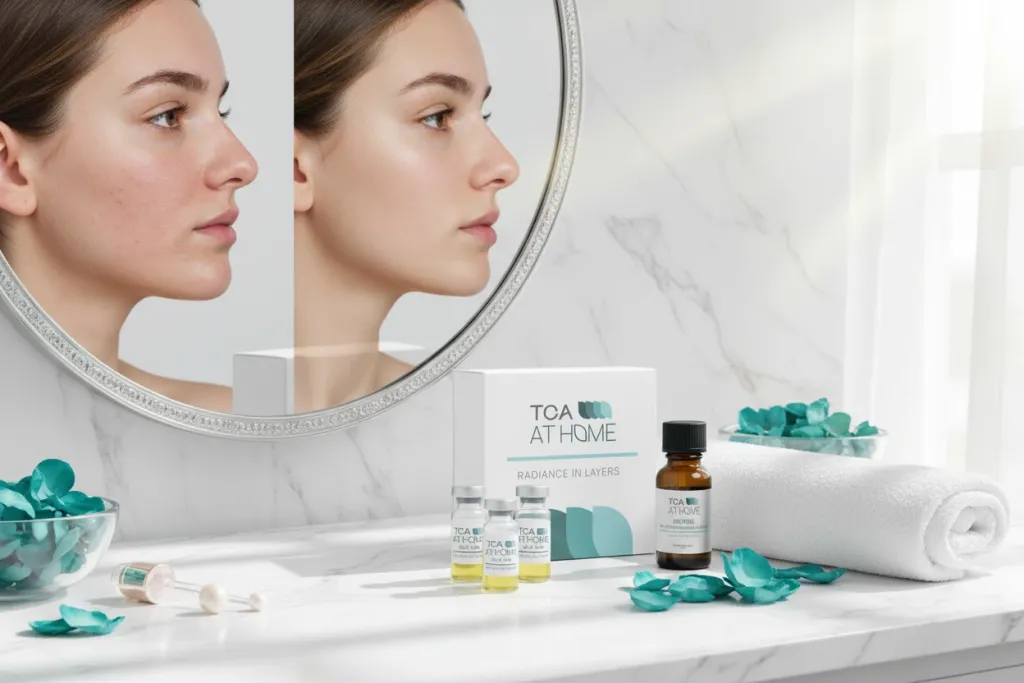
A TCA chemical peel is not an overnight solution. Improvements appear gradually.
Most people notice fewer breakouts, reduced discoloration, smoother texture, and more even tone. Deeper scars usually require multiple sessions spaced several weeks apart.
This is why multi-session planning is common and why multi-vial kits are often chosen for long-term treatment plans.
Who Should Not Use a TCA Peel?
TCA peels are powerful treatments and aren’t suitable for everyone.
– Stay away from them during pregnancy.
– Do not use them if you have active skin infections.
– Avoid them if you have a history of abnormal scarring.
– Do not use them if you have poor wound healing. Anyone unable to commit to proper aftercare should postpone treatment.
When in doubt, professional guidance is always the safer option.
Common Mistakes That Reduce Results
Most issues occur when people rush the process.
Using too many layers can slow down healing. Treating inflamed cysts directly may also cause issues. Repeating treatments too soon is not helpful. Skipping care steps can affect the results.
A clear protocol exists to prevent these problems.
Final Thoughts
A TCA chemical peel for acne is one of the most effective resurfacing options available when used responsibly. It works deeper than most treatments and delivers lasting improvements when paired with the right preparation and recovery.
Clear expectations and patience make all the difference. When done correctly, a TCA peel doesn’t just improve skin. It rebuilds confidence, layer by layer.
Frequently Asked Questions
A TCA chemical peel removes damaged skin layers and stimulates collagen production. This helps reduce acne scars, smooth texture, and fade post-acne marks over time.
TCA peels can be used on acne-prone skin, but active inflammation should be controlled first. They are more effective for acne scars and discoloration than ongoing breakouts.
Initial improvements appear after healing, usually within 2–4 weeks. Collagen remodeling continues for several months, gradually improving texture and reducing scarring.
Yes, when applied correctly and followed by proper aftercare. TCA peels are commonly used for ice-pick and boxcar scars that don’t respond to topical treatments.
Most people experience stinging or warmth during application. The sensation is temporary and subsides as the peel completes its action.