If you’ve dealt with acne for years, you’ve probably tried more products than you can count. Cleansers, serums, prescriptions, facials, lasers.
Some help temporarily. Others do very little. This is where people start comparing TCA chemical peels with other acne treatments. They ask a practical question: what really works long term?
This article breaks down how TCA peels compare to common acne treatments, which option is best for, and when a deeper resurfacing approach makes sense.
How Acne Treatments Really Differ
Most acne treatments fall into one of three categories.
Topical treatments focus on controlling oil, bacteria, and surface inflammation. Prescription medications aim to regulate hormones or reduce internal oil production. Procedural treatments, such as chemical peels and lasers, physically resurface the skin to correct damage.
Each approach has a role. Problems arise when expectations don’t align with what a treatment can realistically achieve.
Topical Products vs TCA Peels
Topical products are usually the first step in acne care. Ingredients like benzoyl peroxide, salicylic acid, and retinoids can be effective for mild acne and maintenance.
However, topicals work gradually and primarily affect the skin’s surface layers. They do very little for established acne scars or serious textural damage.
A TCA chemical peel for acne works differently. Instead of managing symptoms, it triggers controlled skin renewal. By removing damaged layers and stimulating collagen, it addresses the root of scarring and uneven texture.
Prescription Acne Treatments Compared to TCA Peels
Oral medications like antibiotics, spironolactone, or isotretinoin are often prescribed for moderate to severe acne. These treatments can be effective, especially for hormonal or cystic acne.
That said, prescriptions don’t repair skin damage that already exists. Once active acne is under control, many people are left with discoloration, scars, and uneven skin tone.
This is where resurfacing treatments such as TCA peels are often introduced. They are not a replacement for medical treatment, but a complementary step once breakouts are stabilized.
Chemical Peels vs Laser Treatments
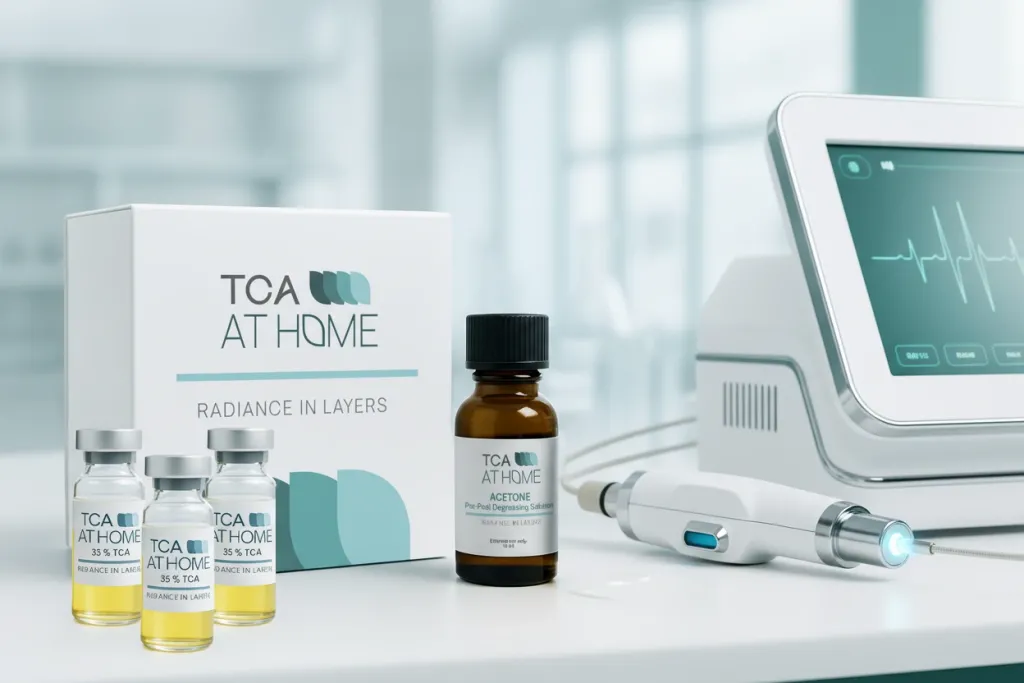
Laser treatments are another popular option for acne scars. They can be effective, but they often come with higher costs, longer downtime, and stricter skin type limitations.
TCA peels offer a more controlled and accessible resurfacing option. When applied correctly, they allow for predictable depth and gradual improvement over multiple sessions.
For people seeking visible results without committing to in-clinic laser procedures, TCA peels are often the more practical choice.
Why TCA Peels Are Often Chosen for Acne Scars
Acne scars form because collagen is damaged during inflammation. Treating scars requires stimulating new collagen in the correct skin layer.
TCA peels reach that layer. Over time, this helps soften scar edges, smooth texture, and reduce post-acne discoloration.
This is why TCA peels are commonly used for ice-pick and boxcar scars that do not respond to surface-level treatments.
At-Home vs In-Clinic TCA Peels
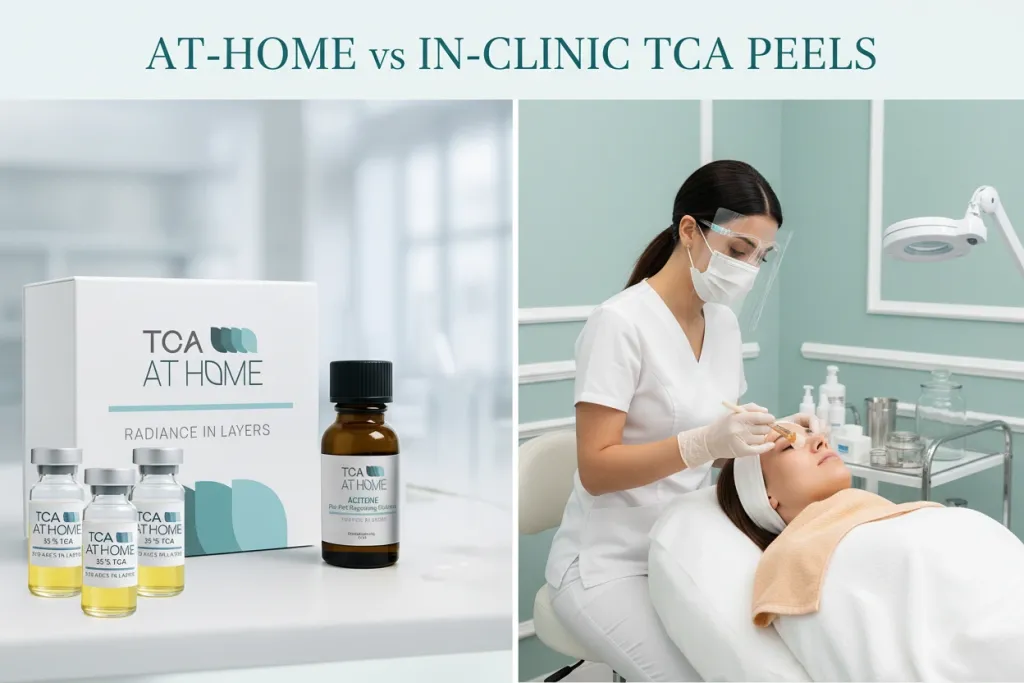
Traditionally, TCA peels were only performed in clinics. Today, advancements in formulation have made TCA at-home systems possible for qualified users.
At-home peels designed with self-neutralizing technology allow for controlled application while reducing the risk of overexposure.
Following a structured protocol is essential.
Choosing the Right Approach for Your Skin
No single acne treatment works for everyone. Mild acne may respond well to topical care alone. Moderate acne often benefits from prescription support. Persistent scars and texture issues usually require resurfacing.
Understanding where you are in that progression helps determine whether a TCA peel is a good fit for you.
A Practical Transition to At-Home Treatment
For people whose acne is under control, scars, dark spots, or uneven skin texture may remain.
An at-home resurfacing plan can help improve these concerns.
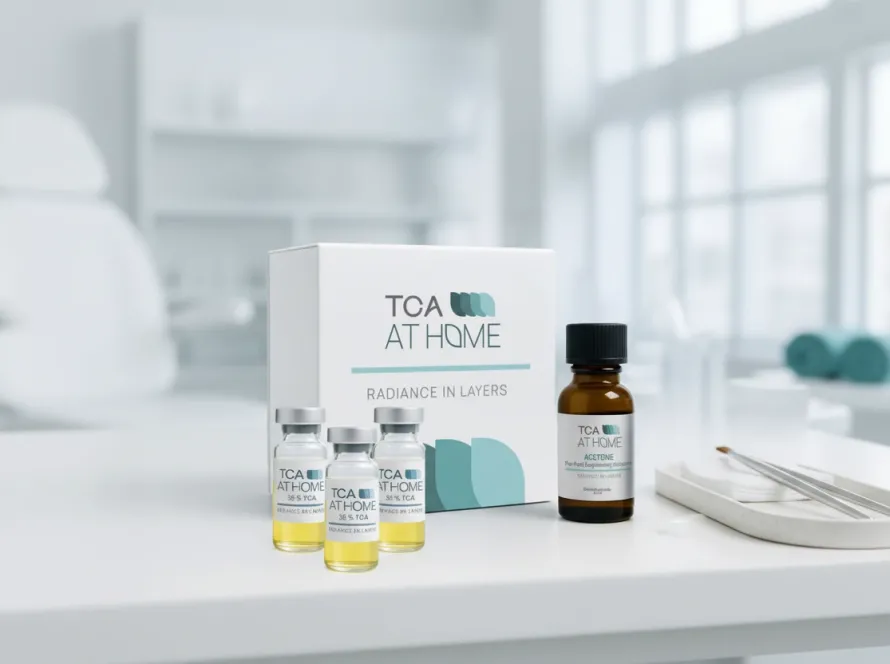
Structured TCA at Home kits are designed for this phase. They provide measured applications, clear preparation steps, and defined recovery timelines.
Rather than replacing medical care, these kits are used as part of a long-term skin renewal strategy.
Final Thoughts
Comparing acne treatments isn’t about choosing a single solution. It’s about understanding what each option does well.
A TCA chemical peel stands out for its ability to resurface damaged skin and address scarring at a structural level. When used at the right time and with the right protocol, it can be a powerful part of a comprehensive acne strategy.
Frequently Asked Questions (FAQs)
They serve different purposes. Acne medication helps control breakouts, while TCA peels improve skin texture, scarring, and discoloration after acne is under control.
Topicals work on the surface and are best for mild acne. TCA peels penetrate deeper and are more effective for scars and long-term texture issues.
TCA peels and lasers both resurface the skin.
But TCA peels are often easier to access.
They also allow controlled, gradual improvement over several sessions.
No. TCA peels complement medical care rather than replace it. They are typically used once acne activity is stabilized.
People with post-acne pigmentation, uneven texture, or scarring benefit most.
This is especially true if surface treatments have not worked.