TCA chemical peels are powerful resurfacing treatments. When used correctly and on the right skin, they can deliver impressive improvements in texture, scarring, and discoloration. However, they are not appropriate for everyone.
Being clear about who should not use a TCA peel is just as important as explaining who benefits from one. This kind of transparency protects users, improves outcomes, and builds real trust.
If you’re considering a TCA peel, this guide will help you decide if it’s right for your skin now. It can also help you decide whether to wait or try other options.
Why Suitability Matters With TCA Peels
A TCA peel works by creating a controlled chemical injury in the skin. That injury triggers healing, collagen production, and regeneration. For this process to work safely, the skin must heal predictably.
Certain conditions, medications, and skin types interfere with that healing response. When that happens, the risk of complications increases.
Understanding these factors ahead of time helps prevent unnecessary damage and disappointment.
People Who Should Not Use a TCA Peel
1. Pregnant or Breastfeeding Individuals
TCA peels are not recommended during pregnancy or breastfeeding. While systemic absorption is low, resurfacing treatments are avoided during this time out of an abundance of caution.
Skin is also more reactive due to hormonal changes, which can increase the risk of pigmentation issues.
2. People With Active Skin Infection
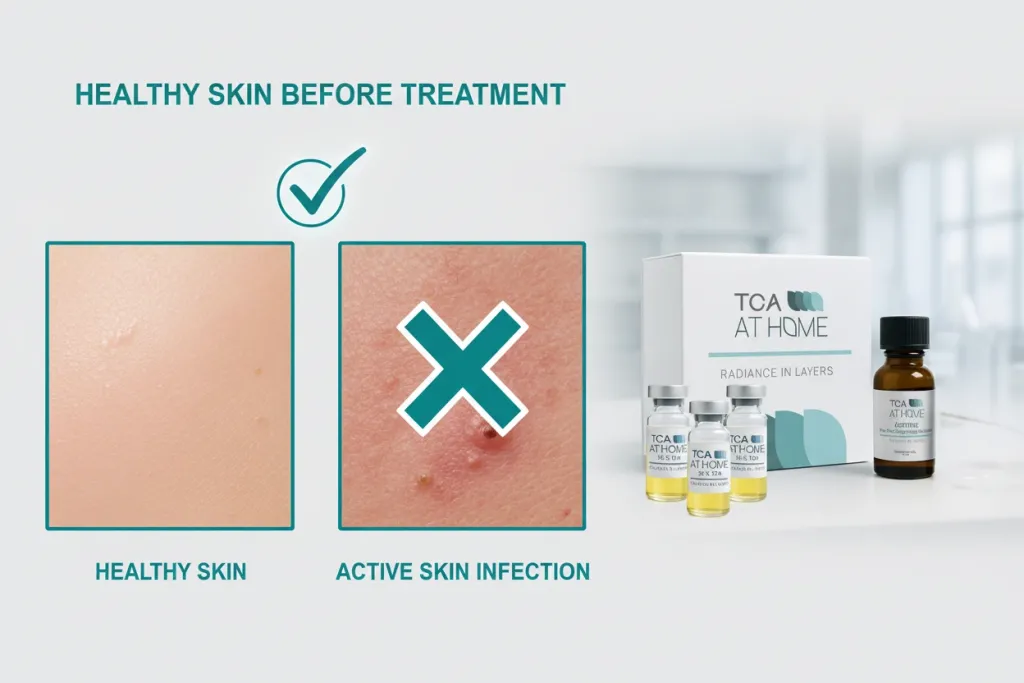
Anyone with active bacterial, viral, or fungal skin infections should not use a TCA peel. This includes cold sores, open wounds, or inflamed cysts.
Applying a peel over compromised skin can spread infection and significantly delay healing.
3. Those With a History of Poor Wound Healing
If you have a history of abnormal scarring, delayed healing, or keloids, a TCA peel may not be right for you.
Because the peel relies on controlled injury, predictable healing is essential for safe results.
4. Individuals Using Certain Medications
Some medications affect skin regeneration and healing. Isotretinoin (Accutane), for example, may require a waiting period before resurfacing treatments.
Other medications that thin the skin or suppress immune response can also increase risk. Always review your medical history before treatment.
5. Those With Very Dark or Unevenly Pigmented Skin (Without Guidance)
TCA peels can be used on deeper skin tones, but they require careful preparation and conservative protocols.
Without proper guidance, the risk of post-inflammatory hyperpigmentation is higher. This doesn’t mean TCA peels are impossible; they should, however, not be approached casually.
6. People Unable to Commit to Aftercare
Aftercare is mandatory after a TCA peel.
If you cannot avoid sun exposure, skip active skincare products, or follow recovery guidelines, treatment should be postponed. Poor aftercare is one of the most common causes of complications.
7. Those Expecting Instant or Perfect Results
A TCA peel is not a quick fix. Healing takes time, and results improve gradually over weeks and months.
If expectations are unrealistic or patience is limited, dissatisfaction is likely even when the peel works as intended.
Situations Where You Should Delay, Not Avoid
Some circumstances don’t permanently rule out a TCA peel, but make timing important.
Delaying treatment often leads to better outcomes than pushing forward too soon.
Why Following a Protocol Matters
Structured protocols exist to reduce risk and standardize results.
Proper prep, careful use, and clear recovery steps help keep the peel within the skin’s safe, helpful range.
This is why reviewing the Application Protocol before treatment is essential.
A Responsible Approach to At-Home TCA Peels
Modern at-home TCA systems are designed to increase safety through measured dosing and self-neutralizing formulas. However, safety features do not replace judgment.
At-home treatments work best for people who understand the process, follow recovery timelines, and commit to proper aftercare.
When you meet those conditions, you can do at-home resurfacing effectively and responsibly.
Final Thoughts
Knowing who should not use a TCA peel is a sign of responsible skincare, not fear.
When used on the right skin, at the right time, and with the right expectations, TCA peels can be transformative. When used incorrectly, they can cause unnecessary harm.
Making an informed decision is the first step toward better skin and better outcomes.
Frequently Asked Questions (FAQs)
Anyone who is pregnant should avoid medium-depth peels.
Avoid them if you have an active skin infection.
Avoid them if you have a history of abnormal scarring. These conditions increase the risk of unpredictable healing and complications.
It’s better to wait until the inflammation settles. Applying a peel over inflamed or infected lesions can increase irritation and delay proper healing.
It can be, but only with proper preparation and conservative technique. Without that, the risk of pigmentation changes increases.
Sensitive skin doesn’t automatically disqualify you, but it requires caution. Fewer layers and longer recovery time are often necessary.