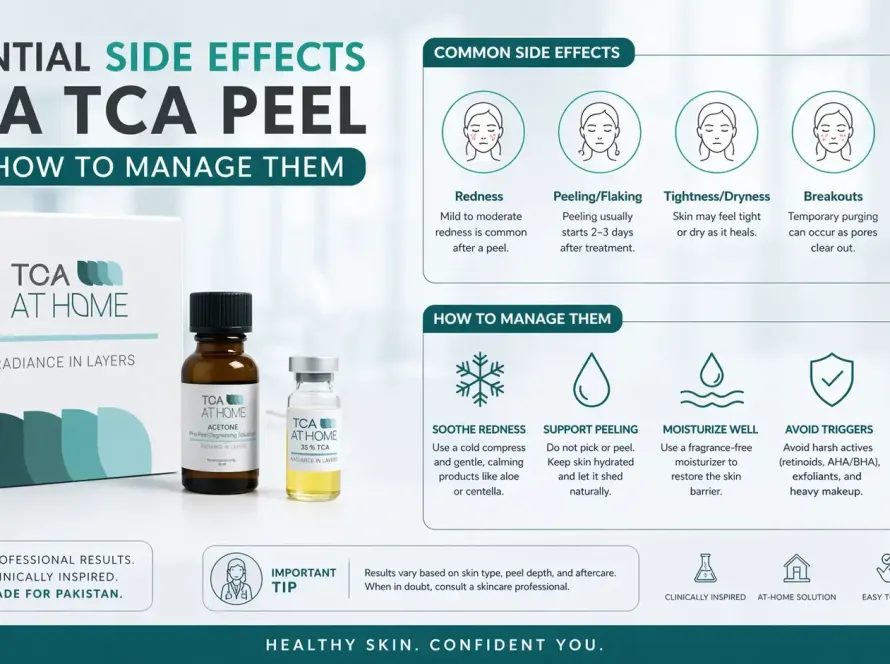
One of the most frequent questions about TCA peels concerns strength selection. With the concentration you choose, you risk either not getting results or an overreaction that leads to irritated skin, excessive peeling, or pigmentation problems. Therefore, peel strength is the most critical factor to consider.
In this article, we help you choose the right strength for your skin and condition.
We also explain the risks and how to use it well.
Understanding TCA Peel Strengths
Trichloroacetic acid (TCA) peels work by creating a controlled chemical injury in the skin. This injury triggers exfoliation, collagen production, and dermal remodeling. The depth of the peel depends on the concentration of TCA used:
- 10–15% TCA (Superficial Peel): Targets only the epidermis. It is ideal for mild pigmentation issues. It also helps minor texture irregularities. It suits first-time users. Recovery is typically short, and minimal peeling is required.
- 20–25% TCA (Medium Peel): Reaches the upper dermis. This strength is effective for acne scars, fine lines, sun damage, and uneven skin tone. Peeling is more noticeable, and downtime can last several days.
- 35%+ TCA (Deep Peel): Penetrates into the papillary dermis. Usually reserved for professional-grade treatments or experienced at-home users under strict protocols. This strength is powerful for stubborn scars, pigmentation, and significant texture concerns, but requires careful aftercare.
Choosing the right strength is not only about results. It also depends on your skin’s tolerance and healing.
Factors to Consider When Choosing Peel Strength
1. Sensitivity and Skin Type
The sensitivity of your skin is one of the important factors in determining which peel you should get. If your skin is sensitive, you may not tolerate the higher-concentration peels. If you experience flushing, redness, or irritation, it may be best to start with a lower concentration. Once you begin getting peels, your skin can start to acclimate to the higher concentrations.
2. Goals and Skin Issues
What do you wish to accomplish with the peel? Do you want to minimize mild scarring from acne, remove sun spots, or reduce the appearance of fine lines?
If you only have minor skin concerns, a superficial peel may be sufficient. However, if your concerns are more significant, such as textured acne scarring, severe sun damage, or persistent pigmentation, you may need a more intensive peel. Just be honest with yourself and your provider about your expectations.
3. Peels and Previous Experience
For those who have never had a peel, it’s best to start with lower concentrations and be conservative. This approach helps your skin adjust to the peel safely, without overstraining the skin barrier. However, experienced individuals with a thorough understanding of the protocol may be able to proceed with stronger peels.
4. Skin Type and the Fitzpatrick Scale
Some skin types are more sensitive to hyperpigmentation. If your skin is darker, you may need to be more careful with TCA (trichloroacetic acid) peels. However, you can still use higher levels of TCA with the right support and layers.
5. Time and Commitment for Recovery
The stronger the peel, the longer the required downtime. Think carefully about your plans and your ability to dedicate time to aftercare. Medium and deep peels come with significant peeling, redness, and sensitivity. If you cannot commit to sun-avoidance and barrier-repair routines, it’s better to choose a lighter peel.
Soft Product Bridge: Choosing the Right TCA Peel Kit
When selecting a TCA peel kit for home use, look for one that provides clear instructions, proper dosing, and safety measures. At-home kits are available in 1 vial , 2 vials, or 3 vials, each with a different coverage area. Start with a kit that fits your experience level and skin concerns. Always follow the Application Protocol for layering, timing, and post-peel care.
This approach ensures that your peel is both safe and effective, without unnecessary risks.
How to Apply Peel Strength Knowledge Safely
Even when you select the correct concentration, safety depends on your preparation and application:
- Prep Your Skin: Cleanse thoroughly, degrease if recommended, and avoid irritants in the days leading up to your peel.
- Follow Layering Instructions: Apply slowly, layer by layer. Observe your skin’s reaction.
- Use Protective Measures: Gloves, neutralizing solutions (if required), and careful handling prevent mistakes.
- Commit to Aftercare: Hydrate, protect your skin from the sun, and avoid strenuous activities until fully healed.
Peel strength, preparation, and aftercare together determine your results.
Final Thoughts
Choosing the right TCA peel strength involves balancing desired results, skin tolerance, and recovery capability. Start with a mild peel, know your skin type, and follow proper aftercare for a safe, effective at-home peel.
Remember, stronger does not always mean better. Controlled, consistent resurfacing yields better long-term results than pushing your skin too hard. When in doubt, consult guidelines, start lower, and work up gradually.
By knowing your peel strength and using it carefully, you can enjoy smoother, brighter, and more even skin at home.
Frequently Asked Questions (FAQs)
Yes, but only after your skin has fully recovered and you understand your tolerance. Gradually increasing strength reduces the risk of irritation or pigmentation issues.
Not necessarily. A stronger peel can produce deeper results, but only if your skin can handle it. Overestimating strength often leads to longer downtime and a higher risk of complications.
Frequency depends on peel depth and skin recovery. Superficial peels can often be repeated every 4 to 6 weeks. Medium peels may need 6 to 8 weeks between sessions. Deep peels should be spaced even further apart.
Deep peels require extreme caution. Only experienced users with proper kits, protocols, and aftercare should attempt high-strength TCA peels at home.