If you’re planning a chemical peel process, one question always comes up:
“What will my skin actually look and feel like each day?”
That’s a smart question to ask. Because once you understand the chemical peel day-by-day process, everything becomes easier. You feel more prepared, less anxious, and far less likely to make mistakes during healing.
A chemical peel process, especially a TCA peel, is not a one-day result. It’s a controlled skin renewal process that unfolds over several days. Each stage has a purpose. Each reaction you see is part of the skin repairing itself.
In this guide, you’ll learn exactly how the chemical peel process works, from application to fresh skin.
What Happens During a Chemical Peel Process?
Before we break down the chemical peel process day by day, let’s quickly understand what’s happening under the surface.
A chemical peel works by applying acids that break down the bonds between damaged skin cells. This causes the outer layer to shed while triggering new cell turnover and collagen production underneath.
In the case of a TCA peel, the process goes a bit deeper than surface-level exfoliation. That’s why results can be more noticeable, but it also means healing needs to be respected.
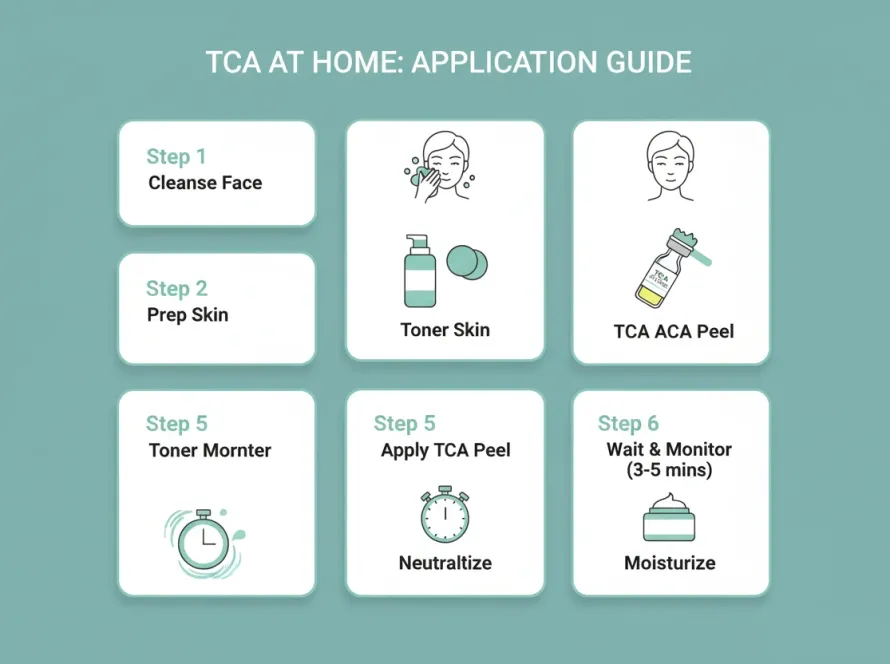
If you’re new, it’s worth reviewing the full TCA peel at home guide and understanding the application process before starting.
Before the Peel Process: Setting the Stage
Your results don’t start on day one. They actually begin before you apply the peel.
In the days leading up to your chemical peel process:
- Keep your skin hydrated
- avoid strong actives like retinoids
- Limit sun exposure
Healthy skin responds more evenly. That means smoother peeling and better results. If you haven’t done this step yet, take time to read the full guide on how to prepare your skin for a TCA peel.
Day 1 of the Chemical Peel Process: Tight, Warm, and Slightly Red
This is the day you apply the peel.
Right after application, your skin may feel:
- warm
- tight
- slightly sensitive
Some people describe it as a mild sunburn. Others notice a faint yellow or tan tone on the skin. That’s completely normal. It simply means the solution is active. At this stage, nothing dramatic is visible yet. However, the process has already started beneath the surface.
What to focus on:
Keep your skin calm and hydrated. Avoid touching your face unnecessarily. Also, avoid sweating or heat exposure. This can increase irritation.
Day 3 to 4 of the Chemical Peel Process: Dryness Begins, Peeling Starts Slowly
Now the skin starts to change.
Tightness increases, and dryness becomes more noticeable. You may begin to see early peeling, especially around areas like:
- the corners of the nose
- around the mouth
- between the eyebrows
This stage can feel uncomfortable, but it’s completely expected.
Important reminder:
Do not pick at your skin. It might be tempting, but interfering at this stage can disrupt healing and lead to uneven results.
Day 3 to 4: Active Peeling Phase
This is where the real transformation begins.
Peeling becomes more visible and spreads across the face. In some areas, the skin may flake lightly. In others, it may peel in larger sections.
Your skin might look:
- patchy
- slightly darker in areas
- uneven in texture
This is the peak peeling phase. Although it may not look great, this is actually a positive sign. It means your skin is shedding damaged layers and making way for new skin underneath.
What matters most here:
Stay patient and gentle. Cleanse lightly. Moisturise consistently. And most importantly, let the skin shed naturally. If you’re unsure about how to manage this stage, your TCA peel aftercare routine becomes very important.
Day 5 to 6: Peeling Slows Down
At this point, the intense peeling phase starts to ease.
You’ll notice:
- less flaking
- smoother patches appearing
- reduced tightness
Some areas may still peel slightly, especially where the skin is thicker or more damaged. Your skin may still look a bit pink. That’s normal and part of the healing process.
What to focus on:
Keep supporting your skin with hydration and protection. Avoid introducing active skincare too early. The skin is still healing, even if it looks better on the surface.
Day 7: Fresh Skin Starts to Show
By the end of the first week, most of the visible peeling is complete.
Now you’ll start to see the real results:
- smoother texture
- more even tone
- brighter appearance
Your skin may still feel slightly sensitive, but it’s significantly improved compared to earlier days. This is the stage where people begin to understand why TCA peels are so effective.
Week 2 and Beyond: Ongoing Improvement
Even after peeling stops, your skin continues to improve. Collagen production is still active. Skin tone continues to even out. Texture becomes more refined over time. Some mild redness may remain, especially if the peel was deeper. However, this gradually fades. At this stage, you can slowly return to your normal skincare routine, as long as your skin feels stable.
👉 External reference on skin healing:
https://www.ncbi.nlm.nih.gov/pmc/
Common Reactions vs Warning Signs
It’s important to know the difference between normal reactions and signs that something may not be right.
Normal:
- redness
- dryness
- peeling
- tightness
Less common but possible:
- temporary breakouts
- mild swelling
When to pause and reassess:
If you notice excessive irritation or uneven healing, revisit your process. Often, these issues come from mistakes like over-layering or skipping preparation. If you want to avoid these problems, take time to review common mistakes during a TCA peel.
How Long Does the Chemical Peel Process Take?
For most people, the visible process lasts around 5 to 7 days.
However, deeper healing continues beyond that.
Your final results depend on:
- peel strength
- number of layers
- skin type
- aftercare consistency
That’s why many people see better results after a series of peels, not just one.
How Often Should You Repeat the Process?
You should always allow your skin enough time to fully recover.
Most people wait 4 to 6 weeks between peels.
This spacing allows:
- full skin regeneration
- collagen rebuilding
- reduced risk of irritation
If you’re planning multiple sessions, it’s worth choosing the right TCA peel kit for home use so you can maintain consistency.
Final Thoughts on the Chemical Peel Process
A chemical peel is not just a treatment. It’s a process your skin goes through step by step. When you understand what happens each day, you stop guessing. You stop worrying. And you start making better decisions. The peeling, dryness, and temporary discomfort are all part of something bigger. Your skin is renewing itself in a controlled way. If you stay patient, follow the right protocol, and take care of your skin during recovery, the results are worth it.
FAQ’S
Most people begin peeling around day 2 or 3. It often starts in smaller areas and gradually spreads across the face.
Yes, completely normal. During days 3 and 4, the skin may look patchy and uneven. This is part of the renewal process.
No, and you shouldn’t try to. Letting the skin shed naturally leads to better and safer results.
Initial results appear around day 7, but improvements continue over the next few weeks as the skin heals fully.
Picking can lead to irritation, uneven tone, or even scarring. It’s always best to let the process happen naturally.