TCA peels can deliver real results. They help with acne scars, uneven texture, and stubborn pigmentation. However, if you have sensitive skin or a deeper skin tone, the approach needs to be more careful. That does not mean you should avoid TCA peels altogether. It simply means you need to understand how your skin behaves, adjust the technique, and respect the process more closely. When done correctly, people with sensitive or dark skin can still benefit from TCA peels. The key is control, preparation, and patience.
Let’s walk through what actually matters.
Why TCA Peels for Sensitive Skin Need a Careful Approach
Not all skin reacts the same way to chemical peels. Sensitive skin tends to react faster. It can become irritated more easily, and recovery may take longer if the peel is too aggressive. Darker skin tones, on the other hand, have more active melanocytes. This means the skin is more prone to post-inflammatory hyperpigmentation. In simple terms, even mild irritation can trigger dark patches. Because of this, the goal is not to push the peel deeper. The goal is to keep the treatment controlled and predictable. This is where many people go wrong. They treat all skin types the same, and that’s when issues start to show.
Start With Skin Preparation, Not the Peel
Before thinking about layers or strength, focus on your skin condition.
If your barrier is not stable, the peel will not behave evenly. Sensitive or reactive skin needs extra time to calm down before treatment.
In the days leading up to your peel:
- Keep your routine simple
- Focus on hydration
- avoid strong actives like retinoids or acids
This step alone can make a huge difference. If you need a structured approach, follow a proper guide on how to prepare your skin for a TCA peel. It helps you avoid starting the treatment on compromised skin.
Layering in TCA Peels for Sensitive Skin: Less Is More
This is the most important rule for sensitive and darker skin types. You do not need multiple aggressive layers to get results. In fact, using fewer layers often produces better and safer outcomes over time. Each layer increases penetration. So instead of stacking layers quickly, apply slowly and observe how your skin reacts. Give your skin time to respond before deciding if another layer is needed.
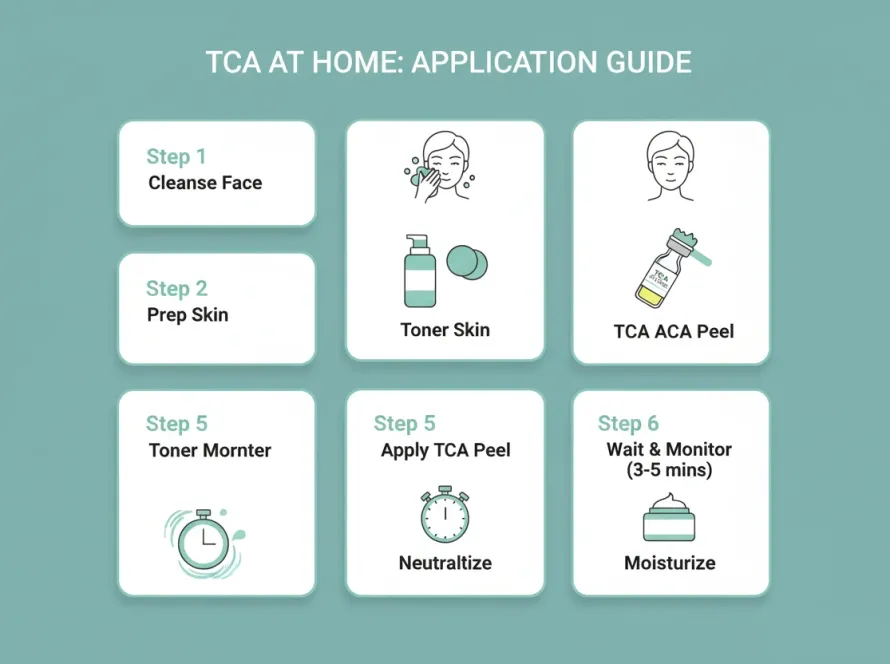
If you’re unsure about how layering works, review a detailed step-by-step TCA peel application guide before starting.
Understanding Pigmentation Risk
Let’s talk about the biggest concern: hyperpigmentation. After a peel, your skin is more vulnerable. If irritation or sun exposure occurs during healing, the skin may respond by producing excess pigment. This is not a failure of the peel. It’s a response from the skin trying to protect itself.
TCA peels for sensitive and dark skin require a balanced approach that focuses on safety, gradual progress, and proper aftercare.
How to reduce pigmentation risk
First, avoid over-treating your skin. More layers do not mean better results. Second, take sun protection seriously. Even short exposure can trigger pigment changes during recovery. Third, do not rush into another peel too quickly. Give your skin enough time to fully heal between sessions.
If you want a deeper understanding of risks, it’s worth reviewing the potential side effects of a TCA peel and how to manage them.
What Sensitive Skin Users Should Watch For
If your skin is sensitive, reactions may appear earlier or feel stronger.
You might notice:
- more redness
- longer-lasting tightness
- slightly extended peeling time
This does not mean something is wrong. It simply means your skin needs a slower pace. The solution is not to stop completely. It’s to adjust your approach. Use fewer layers. Extend the time between treatments. Focus more on recovery than intensity.
Healing After TCA Peels for Sensitive Skin
One mistake many people make is trying to speed things up. They peel too often. They introduce active skincare too early. Or they expect quick transformations. However, sensitive and darker skin types respond better to gradual improvement. Give your skin time to rebuild properly. This is how you avoid complications and get consistent results over time.
If you want to understand how healing progresses, reviewing the chemical peel day-by-day process can help you stay patient during recovery.
When to Seek Guidance
At-home TCA peels can be safe when done correctly. However, some situations require extra caution.
If you have:
- a history of hyperpigmentation
- highly reactive skin
- If there were previous negative reactions to peels
then it’s worth slowing down and being more deliberate. In some cases, getting professional advice before starting can help you avoid unnecessary setbacks. Also, always review who should NOT use a TCA peel to make sure your skin is a good candidate.
Choosing the Right Kit for Your Skin Type
Your kit choice should match your experience and goals. If you have sensitive or darker skin, starting with a smaller kit often makes more sense. It allows you to test how your skin reacts without overcommitting. As you become more confident, you can gradually adjust your approach.
If you’re still deciding, take a look at the guide on choosing the right TCA peel kit for home use. It helps match the kit size to your treatment plan.
A Smarter Way to Approach Results
Instead of chasing fast results, focus on controlled progress. For example, treating pigmentation or texture in sensitive skin may take multiple sessions. That’s normal. Each session builds on the last. Over time, the skin becomes smoother, clearer, and more even. This approach reduces risk and improves long-term outcomes.
Final Thoughts
TCA peels are not off-limits for sensitive or dark skin. They simply require more attention to detail. When you slow down, use fewer layers, and respect your skin’s healing process, you can still achieve strong results without unnecessary risk. The goal is not to push your skin. The goal is to work with it. That shift in approach is what makes the difference. When done correctly, TCA peels for sensitive and dark skin can deliver safe and consistent improvements over time.
FAQ’S
Yes, but they need to be more cautious. Proper preparation, conservative layering, and strict sun protection help reduce the risk of hyperpigmentation.
Not necessarily. Sensitive skin can still benefit, but it requires a slower approach with fewer layers and longer recovery time.
It usually happens when the skin becomes irritated or exposed to sun during healing. This triggers excess pigment production as a protective response.
Focus on preparation, apply fewer layers, and follow aftercare carefully. Giving your skin enough time to heal between sessions is also essential.
No. Starting conservatively leads to safer and more consistent results, especially for sensitive or darker skin types.